
LET'S DIVE INTO ART HISTORY.
FROM 600BCE to TODAY
Explore the diverse world of art history through our curated collection of artists. From Cubism to Surrealism, Contemporary to Classical, and Baroque to more, delve into the rich tapestry of artistic expressions. Each artist featured here is a gateway to a wealth of information, guiding you to external sites with in-depth details about their lives and works.
There are also special sections that highlight other creatives and their influence in the fields of illustration, fashion design, graffiti, graphic design and more.
Intersectionality and representation are essential in the world of art. ALOE aims to demonstrate the breadth of incredible artists from all communities and lived experiences. So many women artists were foundational in building art movements and communities, yet they are only gaining the notoriety and recognition they deserve now.
This section is organised alphabetically by art movement with a list of notable artists from across the world recognised for their foundation or their involvement.
To learn more about an artist click on their name or artwork.
Would you like to recommend an artist for our list?
Let us know.
Main Text References - TATE Art Terms
Please note: Some of the artworks that are referenced on this page may refer to mature themes and material.

'Overheard 1', Will McPhail (illustrator).
Quick reference:
A - Abject, Abstract, Actionist (Viennese), Aesthetic, Anti-artists, Anti-form, Art Intervention, Art Nouveau, Assemblage, Auto-Destructive Art, Automatism
B - Baroque, Bauhaus, Black Atlantic Artists, Body Art, British Black Artists Movement, British Impressionism, Brutalism
C - Capitalist Realism, Classism, Collage, Comic Strip Art, Community Art, Concrete Art, Constructionism, Constructivism, Cubism
D - Dadaism, Décollage, Degenerate Art, Digital Art, Divisionism, Documentary Art, Documentary Photography
E - Environmental Art, Ephemeral Art, Expanded Cinema, Experimental Photography, Expressionism
F - Fantastic Realism, Fauvism, Feminist Art, Figurative Art, Fluxus, Formalism, Found Object, Fresco, Futurism
G - Generative Art, Georgian, Gothic, Graffiti Art, Graphic Design
H - Hard Edge Painting, Hyper-Realism
I - Iconography, Identity Politics, Illustration, Impressionism, Indigenism, Industrial Design, Installation Art, Interactive Art, Internet Art
J - Japonisme, Jewelry Design, Joinery, Journalistic Photography
K - Kinaesthetic Art, Kinetic Art, Kitsch, Kumihimo
L - Land Art, Landscape, Layering, Linocut, Lithography, Live Art
M - Macramé, Magic Realism, Mail Art, Mannerist, Matter Painting, Medieval Art, Memento Mori, Metaphysical Art, Minimalism, Modernism, Modern Realism, Monumental Art
N - Naïve Art, Naturalism, Negative Image, Negative Space, Needlework, Neoclassicism, Neo-Expressionism, Neo-Impressionism, Neo-Plasticism, Neo-Romanticism, Neon Art, Nihonga, Non-Figurative Art, Non-Objective Art, Nouveau, Nouveau Réalisme, Nuance, Nubian Art
O - Objective Abstraction, Orphism
P - Paper Cutting, Paper Mâché, Participatory Art, Performance Art, Photobook, Photo Collage, Photography, Photojournalism, Photomontage, Pointillism, Polaroid Print, Political Pop, Pop Art, Portrait, Post-Impressionism, Post-Modernism, Pottery, Pre-Raphaelite, Public Art
Q - Quietism
R - Rayonism, Realism, Relational Aesthetics, Renaissance Art, Resistance Art, Rococo, Romanticism, Rural Naturalism
S - Screen Printing, Sculpture, Seascape, Silkscreen, Social Realism, Sound Art, Stencil, Street Art, Surrealism
T - Tableau, Tapestry
U - Ukiyo-e, Underground Art, Urban Art, Upcycling, Utopian Art
V - Video Installation, Virtual Reality
W - War Artists, Weaving, White Cube, Wire Sculpture, Woodcut
Y - Youth Movement Art
A
A - Abject Artists
Abject art is used to describe artworks which explore themes that transgress and threaten our sense of cleanliness and propriety particularly referencing the body and bodily functions.
The abject has a strong feminist context, in that female bodily functions in particular are ‘abjected’ by a patriarchal social order. In the 1980s and 1990s many artists became aware of this theory and reflected it in their work. In 1993 the Whitney Museum, New York, staged an exhibition titled Abject Art: Repulsion and Desire in American Art, which gave the term a wider currency in art.
Ana Mendieta (1948 - 1985) Cuban-American
Berlinde De Bruyckere (1964 - ) Belgian
Carolee Schneemann (1939 - 2019) American
Chang Jia (1973 - ) South Korean
Cindy Sherman (1954 - ) American
Dinos & Jake Chapman (1962/1966 - ) British
Gilbert & George (1943/ 1942 - ) Italian / British
Günter Brus (1938 - 2024) Austrian
Helen Chadwick (1953 - 1996) British
Jordan Eagles (1977 - )
Louise Bourgeois (1911 - 2010) French - American
Paul McCarthy (1945 - ) American
Robert Gober (1954 - ) American
Sarah Lucas (1962 - ) English
Teresa Margolles (1963 - ) Mexican
Tetsumi Kudo (1935 - 1990) Japanese
Victoria Reynolds (1962 - ) American



%20-%20(MeisterDrucke-637376).jpg)

A - Abstract Artists
(Abstract Expressionism, Abstract-Création)
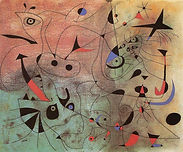
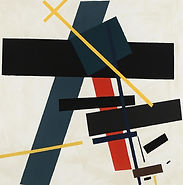
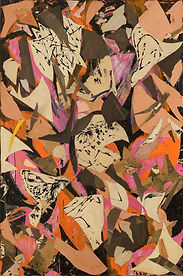
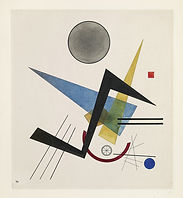
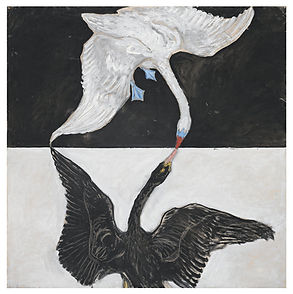
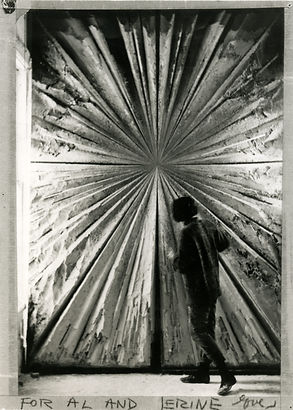
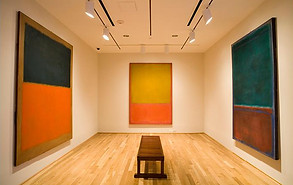
Abstract art is art that does not attempt to represent an accurate depiction of a visual reality but instead uses shapes, colours, forms and gestural marks to achieve its effect.
Strictly speaking, the word abstract means to separate or withdraw something from something else.
The term can be applied to art that is based on an object, figure or landscape, where forms have been simplified or schematised.
It is also applied to art that uses forms, such as geometric shapes or gestural marks, which have no source at all in an external visual reality. Some artists of this ‘pure’ abstraction have preferred terms such as concrete art or non-objective art, but in practice the word abstract is used across the board and the distinction between the two is not always obvious.
Abstract art is often seen as carrying a moral dimension, in that it can be seen to stand for virtues such as order, purity, simplicity and spirituality.
Since the early 1900s, abstract art has formed a central stream of modern art.
Alma Woodsey Thomas (1891 - 1978) American
Ben Nicholson (1894 - 1982) British
Christine Ay Tjoe (1973 - ) Indonesian
Chu Teh Chun (1920 - 2014) Chinese - French
Gerhard Richter (1932 - ) German
Grace Hartigan (1922 - 2008) American
Helen Frankenthaler (1928 - 2011) American
Hilma af Klint (1862 - 1944) Swedish
Jackson Pollock (1912 - 1956) American
Jay DeFeo (1929 - 1989) American
Joan Miró (1893 - 1983) Catalan
Joan Mitchell (1925 - 1992) American
Kazimir Malevich (1879 - 1935) Russian
Lee Krasner (1908 - 1984) American
Mark Rothko (1903 - 1970) American
Mary Abbott (1921 - 2019) American
Perle Fine (1905 - 1988) American
Piet Mondrian (1872 - 1944) Dutch
Robert Motherwell (1915 - 1991)
Wassily Kandinsky (1866 - 1896) Russian
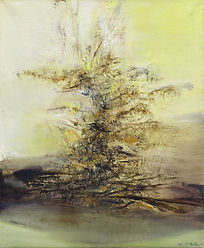
Zao Wou-Ki (1920 - 2013) Chinese - French


A - Actionist Artists
(Viennese Actionism)
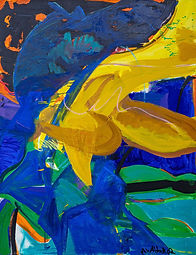
The principal members of the group were Günter Brus, Hermann Nitsch and Rudolf Schwarzkogler. Their 'actions' were intended to highlight the endemic violence of humanity and were deliberately shocking, including self-torture, and quasi-religious ceremonies using the blood and entrails of animals. Nitsch gave his ceremonies the general title of Orgies-Mysteries Theatre. A less violent but no less anguished Vienna action artist of the time was Arnulf Rainer.
In American Dennis Oppenheim, and in Britain Stuart Brisley, performed actions in a spirit that can be related to Wiener Aktionismus.